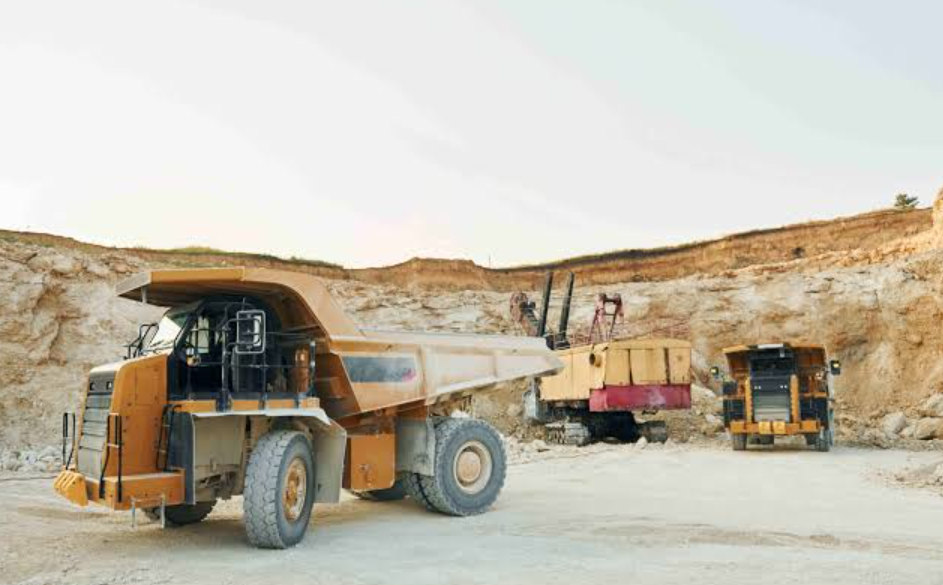
It was a Monday morning in northern Alberta when the site supervisor arrived to find three excavators missing from a remote aggregate operation outside Grande Prairie.
Not vandalized. Not damaged. Gone.
The machines — two Cat 320 excavators and a Komatsu PC290 — had been driven onto lowboy trailers sometime between the last patrol on Friday afternoon and first light Monday. Combined replacement value: over $1.1 million. The site had cameras. They’d been spray-painted over with black aerosol sometime during the night before the machines were loaded. There were no physical guards on site over the weekend. Police response, when finally requested, confirmed what the supervisor already knew: the tracks had gone cold before anyone knew to look.
Incidents like this are not rare in Canada’s mining and aggregates sector — they’re becoming routine.
According to the Insurance Bureau of Canada, heavy equipment theft costs Canadian industry an estimated $800 million annually, with the construction, mining, and oil and gas sectors accounting for the majority of losses. RCMP rural crime unit reports across Alberta, British Columbia, and Saskatchewan have consistently flagged remote industrial and mining sites as high-priority targets for organized equipment theft rings — groups sophisticated enough to scope sites in advance, disable cameras, and move multi-tonne machinery across provincial borders within hours.
For too long, mining security has been treated as a secondary concern — something addressed after permits are issued, financing is secured, and operations are underway. The industry is learning, often at significant cost, that this approach is no longer adequate.
Why Modern Mine Sites Have Become Attractive Targets
Mining operations in Canada present a unique combination of characteristics that make them attractive targets for theft, vandalism, and unauthorized access.
High-value machinery in low-surveillance environments. A single excavator, haul truck, or drill rig represents hundreds of thousands to millions of dollars in capital value. At an active mining operation, dozens of these machines may be present simultaneously. Yet outside of operating hours — overnight, over weekends, during seasonal shutdowns — these assets often sit in remote locations with minimal or no physical security presence.
Fuel storage. Mining operations consume enormous volumes of diesel. Large on-site fuel storage — often tens of thousands of litres in above-ground tanks — represents a straightforward theft target. Fuel theft from industrial sites across Alberta has been documented repeatedly in RCMP reports, with some operations losing 20,000 to 50,000 litres in a single overnight incident.
Copper and electrical infrastructure. The copper cabling, grounding systems, transformer components, and electrical panels that power mine site operations are consistently among the most targeted materials in rural industrial crime. A single haul road power distribution system can contain thousands of dollars in recoverable copper. Theft of this infrastructure doesn’t just result in material loss — it can halt operations for days while replacements are sourced and installed.
Explosives and controlled substances. Mining operations involving blasting maintain licensed explosives storage on site. The security implications of inadequate protection at explosives magazines are self-evident — and the regulatory consequences of a breach are severe. Under federal Explosives Act requirements and provincial regulations, operators are responsible for maintaining secure storage with documented access control. A security failure at an explosives magazine can result not just in criminal liability but in operating licence suspension.
Remote geography and limited response capacity. Canadian mining operations, particularly in northern Alberta, British Columbia, and the territories, often sit 60 to 200+ kilometres from the nearest RCMP detachment. Police response times to remote mine sites in non-emergency situations can run 90 minutes to several hours. For an organized theft crew, that response window is more than sufficient.
Seasonal and logistical complexity. Mining operations run through Alberta winters, spring breakup, and remote access conditions that change significantly by season. Security programs that work in July may be entirely inadequate in February when reduced daylight, road closures, and severe weather compound the challenges of remote monitoring and patrol.
See also: enhance your online business
Mining Security Has Changed — And Most Operations Haven’t Kept Up
There’s a persistent image of mine site security as a gate guard in a warm shack checking ID at the entrance road. That model — static, single-point, passive — was marginal in the 1990s. In today’s operating environment, it’s a liability.
Modern mining security is a layered, technology-enabled, operationally integrated discipline. Leading operations in Canada and internationally have moved to security frameworks that treat physical protection, surveillance technology, and human response as integrated components rather than separate, disconnected elements.
This integration means:
Perimeter and access control systems that document every vehicle and person entering the site — not just employees, but contractors, vendors, regulators, and visitors — with records that can be reviewed, audited, and referenced in incidents.
Remote video monitoring that maintains surveillance of critical areas — equipment yards, fuel storage, explosives magazines, laydown areas — even when no physical guards are present on site.
Mobile patrol coverage that removes the predictability of a static guard post and replaces it with variable-interval patrols that a scoping threat actor cannot plan around.
AI-assisted surveillance analytics that detect unusual activity — a person in an area they shouldn’t be at 2 AM, a vehicle with an engine running in a secured equipment yard — and trigger alerts to monitoring operators before the situation progresses.
Documented incident reporting that creates a record of security activity, responses, and outcomes that supports insurance, regulatory, and legal requirements.
The gap between what the best-run mining operations have implemented and what the average Alberta mine site currently has in place represents significant risk exposure — risk that is increasingly expensive when it materializes.
Common Threats Facing Canadian Mining Operations
Understanding the specific threat landscape is the foundation of any effective security program. For Canadian mining operations, the threat inventory is broader than most operators appreciate.
Equipment Theft
Heavy equipment theft is the highest-profile category, partly because the losses are large enough to generate insurance claims and police reports. Excavators, haul trucks, skid steers, generators, compactors, and drilling equipment have all been targeted at Canadian mine sites. Organized theft networks move equipment quickly — often within 24 hours of theft — across provincial boundaries, into chop shops, or onto containers destined for export markets where serial number tracing is more difficult.
The Alberta Law Enforcement Response Teams (ALERT) have documented organized crime involvement in rural equipment theft across the province, noting that some theft rings have advance scouts who monitor procurement listings, construction starts, and equipment deliveries.
Fuel Theft
Large diesel storage is a high-frequency, low-profile theft target. Fuel theft rarely generates the same attention as equipment theft, but it accumulates. Operations with inadequate fuel storage security can sustain recurring losses across an operating season that, in aggregate, rival equipment theft in dollar value. Tank monitoring, locked fill points, and camera coverage of fuel storage areas are baseline mitigations.
Copper and Electrical Infrastructure Theft
With copper commodity prices at elevated levels over recent years, theft of electrical infrastructure has become a significant concern across all industrial sectors in Alberta. Mine sites are attractive targets because the value density of copper cabling is high and the weight of what can be removed in a single visit is significant. Damage from copper theft often exceeds the value of the copper stolen — when wiring is pulled from live or critical systems, the repair, testing, and recommissioning costs can be substantial.
Trespassing and Unauthorized Access
Not all unauthorized access at mine sites is theft-motivated. ATV users and recreational riders, hunters, urban explorers, scrap metal scavengers, and individuals in search of fuel or shelter all access mining properties without authorization. Beyond the security risk, unauthorized access creates liability exposure — an injury to an unauthorized person on a mine site can generate significant legal consequences for the operator regardless of how the person came to be there.
Under Alberta’s Occupational Health and Safety Act, mine operators carry specific responsibilities for site safety that extend to controlling access and preventing exposure of unauthorized individuals to industrial hazards.
Vandalism
Equipment and facility vandalism at mining sites ranges from opportunistic graffiti to deliberate damage of machinery, communications equipment, camp facilities, and access infrastructure. Vandalism of communications towers — a documented occurrence at remote resource sites — can disable the very monitoring and communication systems that would detect a subsequent more serious incident.
Protest and Demonstration Activity
Some Canadian mining projects have attracted organized opposition, particularly where operations overlap with environmental or Indigenous land concerns. Professional, lawful security management of demonstration activity requires specific protocols: maintaining legal access for authorized personnel while respecting the rights of demonstrators, documenting activity for legal and regulatory purposes, and de-escalating tensions rather than creating confrontations. Guards without specific training and protocols for this environment create legal and reputational risk, not security.
Cyber-Physical Risks
Modern mine sites run significant operational technology — SCADA systems, remote monitoring platforms, communications infrastructure, and increasingly cloud-connected equipment management systems. The physical security of the server rooms, communications equipment, and operational technology infrastructure that supports these systems is a direct component of cybersecurity. Physical access to operational technology is physical access to the mine’s operational control systems. This intersection is increasingly recognized in critical infrastructure security frameworks, including those referenced by the Canadian Centre for Cyber Security.
Why Remote Locations Require a Fundamentally Different Security Approac
The security strategies that work for urban construction sites, commercial properties, and industrial facilities do not translate directly to remote mining operations. The differences are operational, not just logistical.
Response time reality. A security guard 8 km from an Edmonton industrial site can reach a problem in under 10 minutes. A guard or RCMP unit responding to an incident at a mine site 120 km northwest of Grande Prairie is facing a response time measured in hours, not minutes. Security programs for remote sites must account for this reality by prioritizing deterrence and early detection over response — because by the time any response arrives, the window for intervention will often have closed.
Communications infrastructure limitations. Remote mine sites in Alberta operate in areas where cellular coverage is unreliable or absent. Security systems that depend on LTE connectivity for camera feeds, guard check-ins, or alert notifications need satellite communication backup or mesh network solutions to maintain reliability. A monitoring system that goes offline at 2 AM because of a dropped cellular signal is not providing the coverage it appears to on paper.
Severe weather and operational continuity. Alberta’s climate creates conditions that actively degrade both security infrastructure and human performance. Camera housings rated for -20°C fail in January conditions in northern Alberta. Guards on static posts in cold weather experience measurable degradation in alertness over the course of a long overnight shift. Security plans that don’t account for -40°C operating conditions, blowing snow reducing camera visibility, and ice-covered access roads affecting patrol vehicle capability are plans that will underperform precisely when conditions are most challenging.
Limited neighbouring activity. Urban and suburban industrial properties benefit from ambient surveillance — neighbouring businesses, passing vehicles, residents. A remote mine site may have no legitimate activity within several kilometres overnight. There are no accidental witnesses to deter an intrusion or report suspicious activity. The only surveillance is what the operator explicitly provides.
The True Cost of a Single Security Incident at a Mining Operation
Security is consistently treated as a cost to be minimized. The calculation changes entirely when it’s expressed as incident cost versus prevention cost.
Consider the components of a single significant security incident at an Alberta mining operation:
Direct asset loss. Equipment replacement, fuel loss, material theft, infrastructure damage.
Production interruption. An excavator lost to theft or vandalism cannot produce. Depending on the operation, each day of reduced production has a calculable dollar value — and sourcing a replacement machine in the current Alberta equipment market can take weeks, not days.
Investigation and administration. Insurance claims, police reports, regulatory notifications (where required), internal investigations, and the management time consumed by all of the above represent real costs that rarely appear in the headline number from an incident.
Insurance implications. A significant theft or vandalism claim affects premiums and coverage terms at renewal. Multiple incidents in a short period can result in coverage modifications that are difficult and expensive to reverse.
Contract and schedule penalties. Mining operations with contractual production commitments can face penalties for missed targets — penalties that trace directly back to security incidents that disrupted operations.
Regulatory exposure. For operations involving explosives, hazardous materials, or activities with environmental implications, a security incident can trigger regulatory review. The costs of a regulatory investigation — and potential operational restrictions while it proceeds — can substantially exceed the direct value of whatever was stolen or damaged.
Reputation and stakeholder confidence. For publicly traded mining companies, a significant security incident creates disclosure obligations and can affect share price. For privately held operations, it affects relationships with lenders, joint venture partners, and the communities in which the operation is located.
When the full cost of a single serious incident is assembled honestly, the economics of professional security investment are typically very different from the simplified comparison of monthly security costs to the most visible value at risk.
Best Practices for Mining Facility Security
Effective security programs for mining operations in Alberta share a common architecture, regardless of the scale of the operation.
Security Risk Assessment. Every effective security program begins with a documented assessment of the specific site: geography, access routes, asset inventory, threat history, operational schedule, staffing patterns, and existing security measures. A risk assessment that is specific to the site produces security recommendations that address actual vulnerabilities — not generic industrial security defaults.
Controlled Site Access. A single controlled entry point with documented access management — vehicle logs, visitor credentials, contractor authorization records — is the baseline for any serious site security program. Access control must cover all entry points, including secondary roads and fence lines that may receive less attention than the main gate.
CCTV and Remote Video Monitoring. Camera coverage of equipment yards, fuel storage, explosives magazines, and site entry points provides both deterrence and evidentiary documentation. For remote sites, integration with a professional remote monitoring centre — where trained operators are watching live feeds and authorized to act on what they see — transforms passive recording into active surveillance.
Mobile Patrol. Regular, variable-interval patrol across the site footprint by licensed security personnel provides physical presence that static camera coverage cannot replicate. Patrol logs with GPS verification provide documentation that patrols were conducted as planned.
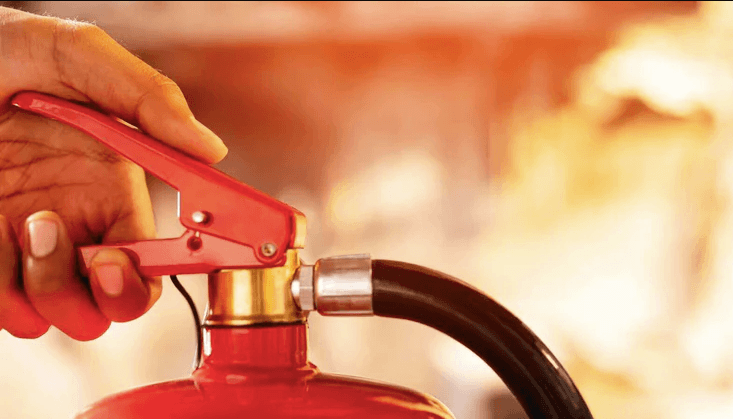
Fire Watch. Hot work operations, vehicle maintenance, and fuel handling create fire risk that requires dedicated monitoring. Fire watch services by qualified personnel are a regulatory requirement in many contexts under Alberta’s Fire Code and OHS Act — and an operational necessity regardless of regulatory requirement.
Incident Reporting. Every security event — regardless of severity — should be documented in a standardized incident report. This documentation is the foundation for insurance claims, regulatory compliance, pattern analysis, and operational improvement.
Emergency Response Planning. A documented emergency response plan, communicated to all site personnel and tested regularly, ensures that when something serious happens, the response is coordinated rather than improvised.
The Role of Technology in Modern Mining Security
Technology has expanded what’s possible in mining site security, particularly for remote operations. The key is understanding that technology enhances human security professionals — it doesn’t replace them.
AI Video Analytics can detect unusual behaviour, unauthorized entry, and perimeter breaches in real time, generating alerts to monitoring operators faster than manual video review. For large sites with extensive camera coverage, AI analytics make comprehensive monitoring practically feasible where it wouldn’t be without automation.
Licence Plate Recognition (LPR) at site entry points creates a searchable, timestamped record of every vehicle that enters or exits. In a theft investigation, LPR data often provides the first lead that investigative resources can work with.
Thermal Cameras detect heat signatures in complete darkness and adverse weather — conditions where standard cameras provide limited visibility. For remote Alberta sites in winter, thermal cameras can maintain effective perimeter surveillance when other systems are degraded by low light and weather.
Drone Surveillance allows a single operator to monitor large site areas that would otherwise require multiple ground-based patrol units. For perimeter checks, equipment yard surveys, and rapid response to alerts, drones add coverage capability at a fraction of the cost of equivalent ground patrol.
GPS-Enabled Patrol Verification provides real-time documentation that mobile patrols are being conducted as planned, with timestamped location records that support reporting and accountability.
Digital Reporting Platforms allow incident reports, patrol logs, and access records to be maintained, searched, and shared electronically — supporting insurance requirements, regulatory compliance, and management oversight.
Alberta’s Growing Mining Sector and Its Security Implications
Alberta’s mining industry extends well beyond the oil sands that dominate provincial energy discussions. The province has active operations in coal, silica sand, aggregate, limestone, and industrial minerals — and is seeing growing exploration activity in rare earth minerals and critical minerals relevant to battery supply chains and clean energy technology.
This diversity of activity is distributed across a broad geographic footprint:
- Fort McMurray and the Athabasca region — oil sands, bitumen, and associated industrial operations
- Grande Prairie and the Peace Country — aggregate, sand, gravel, and industrial minerals
- Hinton, Edson, and the Foothills — coal and aggregate operations
- Whitecourt and Slave Lake corridors — forestry-adjacent industrial minerals
- Cold Lake, Bonnyville, and Lac La Biche — oil sands and resource extraction
- Peace River and Northern Alberta — agricultural minerals and silica sand
Each region has distinct geographic, climatic, and community characteristics that shape what effective security looks like. A security program designed for a surface aggregate operation 30 km from Grande Prairie looks different from one designed for a remote exploration camp 150 km north of Fort McMurray — and a security company without operational experience across these different environments will struggle to deliver an appropriate program for either.
The growth of critical mineral exploration in Alberta — driven by federal and provincial interest in building domestic supply chains for battery materials and clean energy technology — will bring new operations to remote areas of the province over the next decade. Security planning for these projects should begin at the feasibility stage, not as an afterthought during construction mobilization.
How to Choose a Mining Security Company in Alberta
The market for industrial and mining security in Alberta includes companies with very different levels of relevant experience. When evaluating a security provider for a mining operation, these factors distinguish providers that are actually equipped for the work from those who are applying generic industrial security thinking to a specialized environment.
Alberta SSIA Licensing. All security guards operating in Alberta must hold a valid licence under the Security Services and Investigators Act. Ask for documentation — for both the company and the individual guards who will be deployed to your site.
Liability Insurance. For operations with significant asset values and potential regulatory exposure, your security provider should carry a minimum of $5 million in commercial general liability coverage. Request a certificate naming your project entity.
Remote and Rural Operations Experience. Explicitly ask about the provider’s experience deploying in remote locations, operating in severe winter conditions, and managing communications in areas with limited cellular coverage. Request references from comparable projects.
24/7 Dispatch and Emergency Response. A security company that doesn’t have 24/7 operational dispatch cannot provide genuine emergency response capability. Verify this before signing.
Mobile Patrol and Remote Monitoring Integration. Ask specifically about how mobile patrol and remote video monitoring work together in their service model — this integration is a meaningful differentiator between providers who have thought through mining security and those offering a basic guard package.
Digital Reporting. Ask to see a sample incident report and patrol log. Documentation quality reflects operational discipline.
Health and Safety Compliance. Guards deployed to mining sites operate in industrial environments with real hazards. Your provider should have documented OHS policies, site-specific orientation protocols, and safety training appropriate to the deployment environment.
Conclusion: Security Is Not a Cost — It’s a Pillar of Operational Continuity
Alberta’s mining industry operates in some of the most demanding conditions in the country — remote geography, severe climate, complex regulatory environments, and a security threat landscape that is more sophisticated and active than it was a decade ago.
The operations that manage this environment effectively have recognized that security is not a compliance checkbox or a discretionary line item. It is a pillar of operational continuity — one that protects people, preserves assets, maintains production schedules, and upholds the relationships with communities, regulators, and insurers on which long-term operating success depends.
Effective mining security in 2025 and beyond requires a provider who brings more than a guard at the gate. It requires documented risk assessment, technology-enabled surveillance, licensed and trained personnel, 24/7 dispatch capability, structured incident reporting, and the operational experience to deploy effectively in Alberta’s remote industrial environments.
At G4U Security Ltd., we provide specialized security solutions for mining operations, construction sites, and critical infrastructure across Alberta. Our licensed security professionals are trained for industrial deployment, our mobile patrol and remote monitoring services are designed for remote and rural sites, and our reporting infrastructure meets the documentation requirements of insurers, regulators, and project owners.
We are available 24/7 across Alberta, including remote mining regions, and can deploy within hours when projects require immediate coverage. For a no-obligation site assessment and security consultation, contact us at g4usecurity.ca.
About the Author
Attaullah Mallah is the Founder of G4U Security Ltd., a fully licensed and insured security company serving Alberta’s industrial, construction, and critical infrastructure sectors. Under his leadership, G4U Security has built specialized expertise in mining facility security, construction site security, fire watch services, mobile patrol, remote video monitoring, and critical infrastructure protection across Edmonton, Calgary, and remote Alberta locations. G4U Security Ltd. holds a BBB A+ accreditation and carries $5 million in commercial liability coverage. Attaullah is committed to raising the standard of industrial security in Alberta through professional staffing, technology integration, and transparent client reporting.
References
- Natural Resources Canada (NRCan) — Canadian Minerals and Mining Statistics
- Mining Association of Canada — Facts & Figures of the Canadian Mining Industry
- Alberta Energy Regulator (AER) — Mine Financial Security Program
- Alberta Occupational Health and Safety Act — Mine Safety Regulations
- RCMP Rural Crime Watch Alberta — Annual Rural Crime Reports
- Insurance Bureau of Canada — Heavy Equipment Theft Statistics
- Canadian Centre for Cyber Security — Industrial Control Systems Security Guidance
- Statistics Canada — Incident-based Crime Statistics, Industrial Sector Reports
- Alberta Law Enforcement Response Teams (ALERT) — Organized Crime and Property Crime Reports
- Canadian Centre for Occupational Health and Safety (CCOHS) — Industrial Site Safety Standards